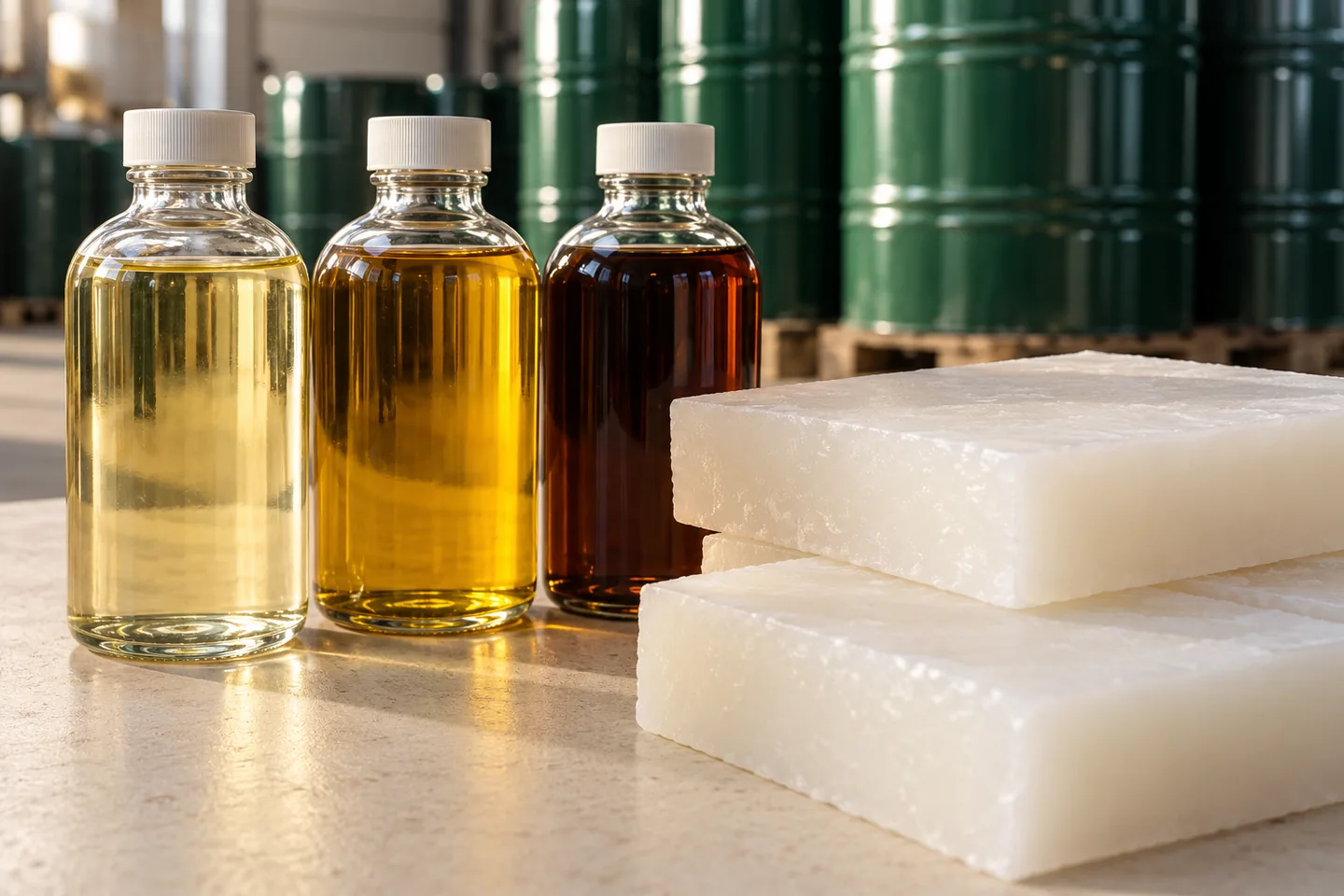
Base oils
Feedstocks for lubricant blending. Identify the required base-oil group or grade, viscosity, viscosity index, pour point and other acceptance limits. A base oil is not a finished engine lubricant and should not be represented as carrying a finished-oil approval.
Engine oils
Finished lubricant enquiries should specify viscosity grade, intended engine or equipment, performance category and any required manufacturer approval. Packaging, label language and the evidence supporting performance claims must be agreed.
Paraffin wax
Wax for applications such as candles, coatings and packaging, selected by refinement level, melting or congealing behaviour, oil content, colour and odour. Food-contact or other sensitive uses require explicit suitability documentation.
Slack and residue wax
Refinery-derived wax streams for further processing or suitable industrial formulations. Define the actual product composition and required oil content, physical properties and end use; commercial names are insufficient to establish interchangeability.
Naphtha and hydrocarbon oils
Feedstock or industrial hydrocarbon enquiries assessed against the intended process. Provide the product identity, distillation requirements and relevant composition or purity limits, together with the receiving facility’s specification.
Furnace oil and diesel
Fuel enquiries require the governing product specification, sulphur and other acceptance limits, intended equipment and destination. The required properties and permitted use are confirmed for the actual supply route.
LPG
Liquefied petroleum gas requirements should define composition, quality specification, cargo size and the receiving terminal’s pressure, temperature and handling requirements. Vessel and terminal compatibility must be reviewed before shipment.